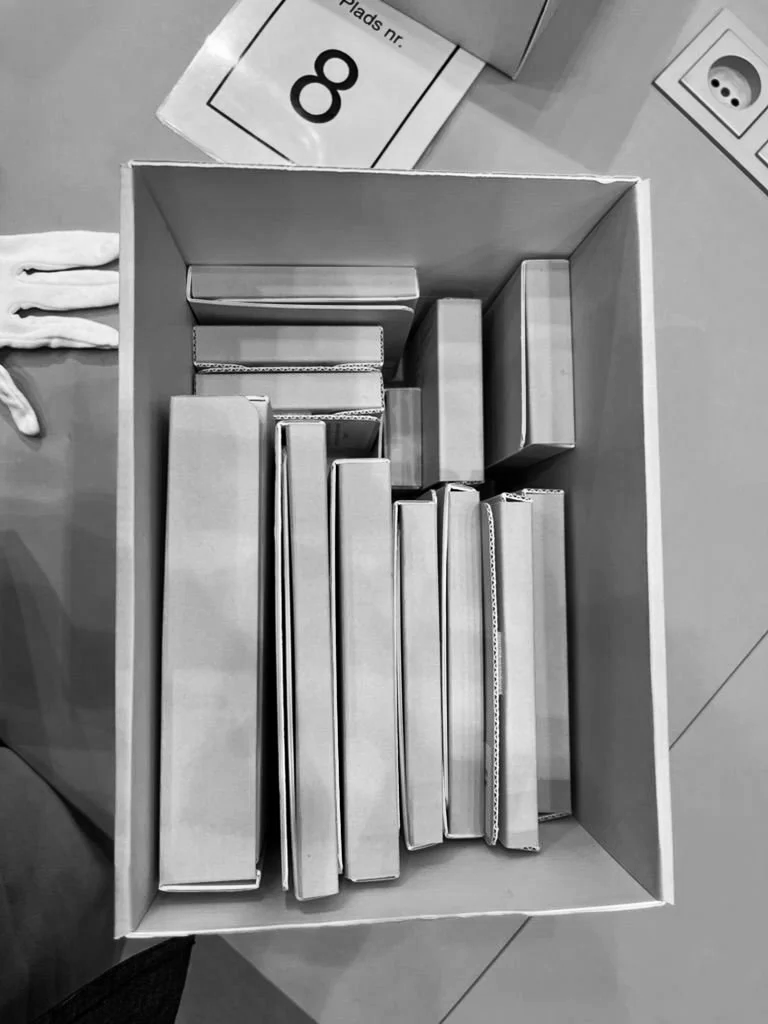
In 2028, Karen Blixen’s Wardrobe will open at the Karen Blixen Museum Rungstedlund, bringing to light a previously untold chapter in Danish and international cultural history. For the first time, Blixen’s wardrobe will be presented as a historical record in its own right: a material history of an extraordinary life, and a lens onto the emergence of the modern woman, the development of Danish and international fashion, and the new visual culture created by photography and mass media during the twentieth century. The exhibition will be accompanied by a book presenting the new research.
The idea for the project originated in 2017, while Louise Rytter, then at Google Arts & Culture, was working with the National Museums of Kenya, including the Karen Blixen Museum in Nairobi, on Utamaduni Wetu: Meet the People of Kenya. Since 2025, Rytter has led an extensive research project to trace Blixen’s lost wardrobe and reconstruct its dispersed history.
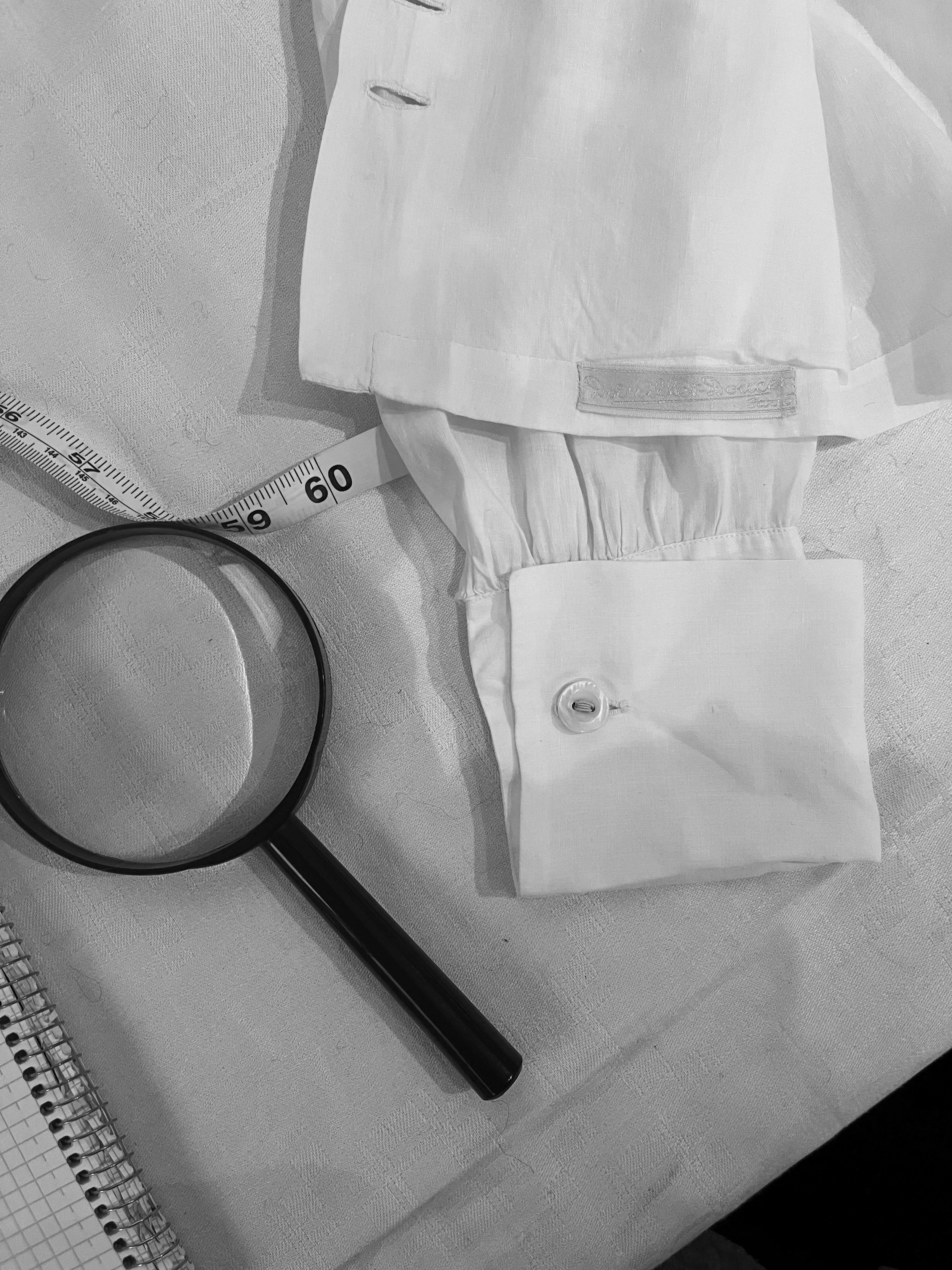
Following Karen Blixen’s death in 1962, most of her wardrobe was destroyed. The surviving garments were dispersed, and much of their cultural and historical context was lost. Garments, jewellery, photographs, letters, diaries, invoices and other archival material have since been identified across museum collections, the Rungstedlund Collection at the Royal Danish Library, the Dinesen family archive, and private archives in Denmark and abroad. Together, these material, written and visual sources make it possible to reconstruct the contours of the wardrobe and restore its significance to Blixen’s life and literary career.
Karen Blixen lived from 1885 to 1962, a period in which the possibilities of being a woman were radically renegotiated. Her lifetime encompassed two world wars, industrialisation, colonialism and decolonisation, women’s suffrage and expanding female independence, alongside profound changes in travel, work and social convention. Her wardrobe registers these transformations at the scale of the individual body. From the disciplined silhouette of the corseted late nineteenth century to the increasingly mobile and self-determined female body of the twentieth, dress accompanied new forms of freedom and new ways for women to inhabit public life.
Blixen’s wardrobe also opens onto a broader history of fashion. Moving between Copenhagen, Paris, London, Rome, British East Africa and, later, the United States, she wore Danish tailoring alongside French, British and American fashion. Bills and correspondence reveal a network of dressmakers, milliners, jewellers, furriers, department stores and couture houses, while surviving garments retain evidence of use, alteration and repair. Through them, the project places Danish fashion history within the international circulation of styles, materials, craftsmanship and commerce that transformed fashion from a predominantly local, craft-based practice into an increasingly international industry.
At the same time, Blixen lived through a revolution in the production and circulation of images. Photography, illustrated magazines, film, radio and television transformed the relationship between public figures and their audiences, creating new possibilities for visibility, celebrity and self-invention. World-renowned for her writing, Blixen also made her own life into an extraordinary story, preserved in words and images. Through dress, pseudonyms, photographs and public appearances, she consciously shaped the figure she presented to the world. Her distinctive slender, hatted silhouette became part of her public identity, captured by some of the twentieth century’s most celebrated photographers and artists, including Richard Avedon, Cecil Beaton, Peter Beard, Carl van Vechten and Rie Nissen.
Seen through the wardrobe, the private and the historical converge. Clothes retain traces of Blixen’s body, age, circumstances and choices, while photographs and archival records reveal how those same clothes became part of a carefully fashioned public image. Her wardrobe connects the intimate history of a single life to larger histories of modern womanhood, fashion, photography and mass media, revealing both how Blixen was shaped by the transformations of her time and how she fashioned the figure by which she is remembered today.
Berlingske Tidende, 16 July 2026
Wanted: Karen Blixen’s Leopard Coat Was Iconic. Where Is It Now?
Karen Blixen’s books are still read across the world, while her stories and extraordinary life continue to inspire artists, writers and designers. Yet the wardrobe through which she fashioned the public figure of Karen Blixen has all but disappeared from cultural memory.
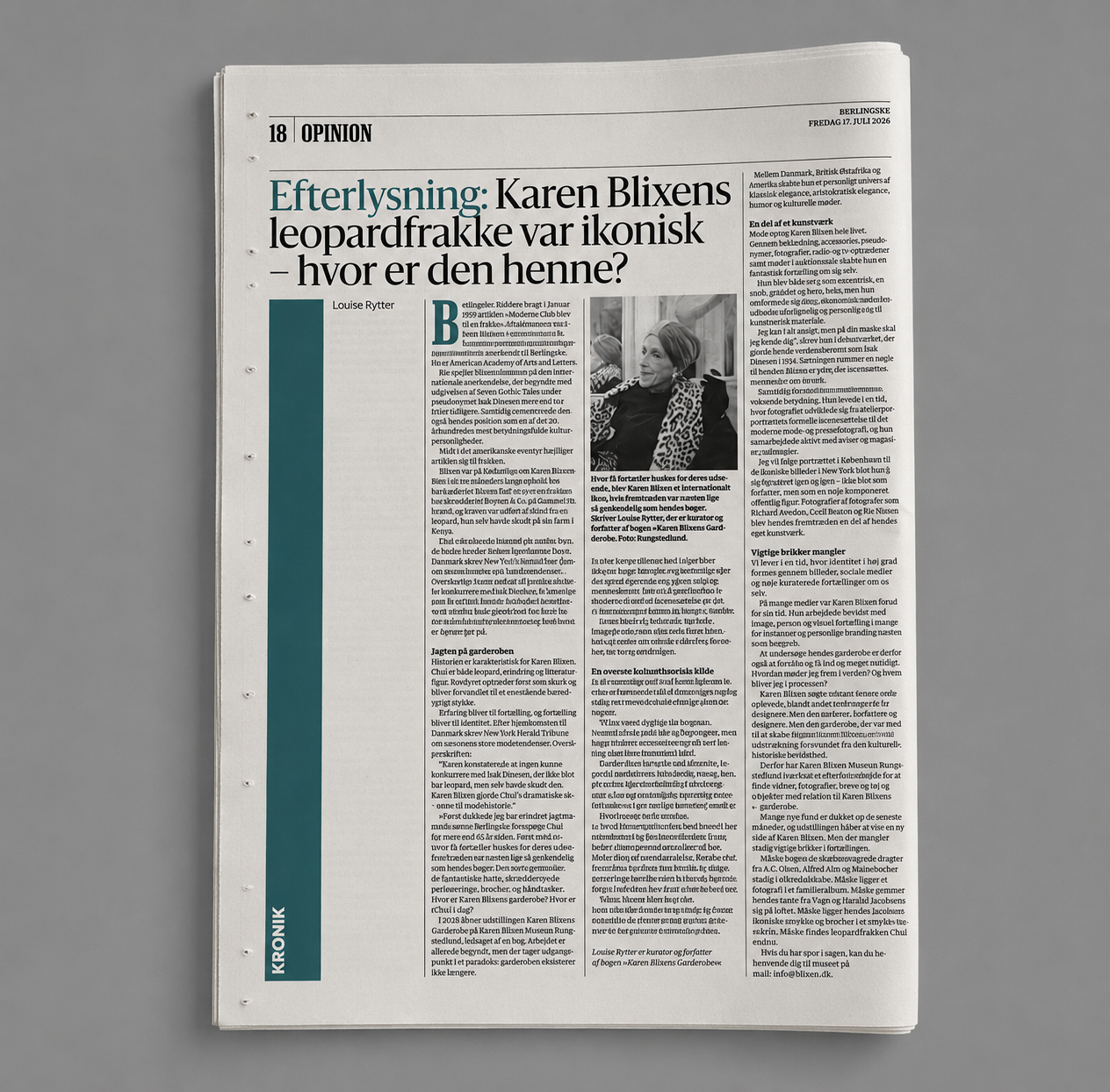
On 1 January 1959, the Danish newspaper Berlingske Tidende published an article under the headline ‘Chui the Killer Became a Collar’. Blixen was about to leave for New York as a guest of the Ford Foundation, having recently been elected an honorary member of the American Academy of Arts and Letters.
The journey marked the culmination of an international reputation that had begun more than two decades earlier with the publication of Seven Gothic Tales under the name Isak Dinesen. It also confirmed her place as one of the twentieth century’s most distinctive literary and cultural figures.
Yet amid the excitement surrounding her American visit, the newspaper chose to focus on something rather different: Karen Blixen’s new coat.
For her three-month stay in America, Blixen had commissioned a coat from Boysen & Co., a Copenhagen tailor on Gammel Strand. Its collar was made from the skin of a leopard she had shot years earlier on her farm in Kenya.
Chui, the Swahili word for leopard, had killed her Scottish deerhound, Dawn, leaving five puppies motherless. The killing was to be avenged, and Chui was eventually caught in Blixen’s trap. When she left Kenya in 1931, she took the skin back to Denmark with her, one of the few possessions to make the journey across the Mediterranean.
Twenty-eight years later, Chui crossed the Atlantic as the collar of her newly tailored coat, worn at the very place where Blixen had once feared the leopard’s claws and fatal bite.
The Search for the Wardrobe
The story is quintessential Blixen. Chui is at once an animal, a memory and a character in a story. The predator begins as the villain and ends as an extraordinary piece of dress.
Experience becomes narrative; narrative becomes identity. After Blixen returned to Denmark, the New York Herald Tribune reported on one of the season’s great fashion trends: leopard.
The paper noted that no one could quite compete with Isak Dinesen, who did not simply wear leopard, but had shot hers herself. In Blixen’s hands, Chui’s dramatic fate had become fashion history.
Our attitudes towards fur have changed profoundly since Berlingske immortalised Chui more than 65 years ago. Read today, however, the story opens onto an aspect of Blixen’s life that has, remarkably, never been properly examined: her wardrobe.
Few authors become as recognisable for the way they look as for what they write. Blixen did. She became an international icon whose appearance was almost as distinctive as her books: black-rimmed eyes, fantastical hats, impeccably tailored suits, extravagant furs, long gloves, pearl earrings, brooches and handbags.
But what became of it all? Where is Karen Blixen’s wardrobe? And where is Chui today?
In 2028, the exhibition Karen Blixen’s Wardrobe will open at the Karen Blixen Museum Rungstedlund, accompanied by a book. The project begins with a paradox: the wardrobe itself no longer exists.
After Blixen’s death in 1962, her clothes, hats, jewellery and personal possessions were dispersed through inheritance, gifts, sales and sheer chance. Reconstructing the wardrobe has therefore become a form of detective work, leading through archives, auction records, private collections and family histories in Denmark, Kenya, Britain, France, Switzerland and the United States.
Karen Blixen’s wardrobe has not survived intact. It survives instead in fragments: a garment here, a piece of jewellery there, and in photographs, letters, receipts and memories.
An Overlooked Source of Cultural History
That such a significant part of Karen Blixen’s life and work has slipped from view also says something about what we have traditionally chosen to preserve as cultural history.
We have been diligent in preserving manuscripts, paintings and buildings, but far less attentive to clothing as a historical source. Yet a wardrobe can reveal a great deal about identity, gender, social aspiration, craftsmanship, taste, economics and international connections.
In Karen Blixen’s case, it also tells a history of Danish fashion across the twentieth century: of tailors and milliners, shoemakers and furriers, department stores, and of a Denmark far more closely connected to the international world of fashion than we might imagine.
Where literary history has traditionally turned to manuscripts, letters and books, the wardrobe offers access to another dimension of Blixen’s creative practice. Her words tell us how she thought and imagined. Her clothes show us how she chose to appear in the world.
Karen Blixen was born in 1885 and died in 1962. Her lifetime spanned some of the most transformative decades of modern history. She witnessed the collapse of empires, two world wars, the advance of women’s emancipation and the emergence of mass media.
From corsetry and haute couture to fashion photography and the rise of the international fashion press, her life unfolded alongside some of the great transformations in the history of dress.
Moving between Denmark, British East Africa and America, she created a highly personal visual world shaped by historical references, aristocratic elegance, travel and cultural encounters.
Part of the Work of Art
Fashion fascinated Karen Blixen throughout her life. Through clothes, accessories, pseudonyms, photographs, appearances on radio and television, and carefully constructed masks, she created an extraordinary narrative around her own identity.
She was variously described as eccentric, a snob, enigmatic and a witch, while transforming illness, financial ruin, unhappy love and personal loss into artistic material.
‘Not by your face, but by your mask shall I know you,’ she wrote in the debut work that brought her international fame as Isak Dinesen in 1934. The line offers a key to understanding both her life and her work.
For Blixen, identity was never simply given. It could be fashioned, developed and performed. The mask was not merely something behind which a person might hide; it could also become a means of creating the self.
She was equally alert to the growing power of the media. Blixen lived through a period in which photography developed from the formal conventions of the studio portrait into modern fashion and press photography, and she engaged actively with newspapers and magazines, among them Berlingske.
From her early portraits in Copenhagen to the iconic photographs made in New York, she repeatedly placed herself before the camera, not simply as an author but as a meticulously composed public figure. Photographed by figures including Richard Avedon, Cecil Beaton and Rie Nissen, her appearance became part of the work of art she made of herself.
Important Pieces Are Still Missing
We live in an age in which identity is increasingly constructed through images, social media and carefully curated narratives of the self.
In many respects, Karen Blixen was ahead of her time. She understood the possibilities of image, persona and visual storytelling long before Instagram or personal branding existed as concepts.
To examine her wardrobe is therefore also to confront a distinctly contemporary question: How do I choose to appear in the world, and who do I become in the process?
Karen Blixen’s books continue to be read around the world, while her stories and life still inspire artists, writers and designers. Yet the wardrobe that helped her construct the figure of Karen Blixen has largely disappeared from cultural memory.
The Karen Blixen Museum Rungstedlund has therefore embarked on a detective investigation to uncover information, photographs, letters, clothes and objects connected with Blixen’s wardrobe.
A remarkable number of discoveries have already emerged in recent months, and the exhibition promises to reveal a side of Karen Blixen that has rarely been seen. But crucial pieces of the story are still missing.
Perhaps one of her tailored suits by Jac. Olsen, Alfred Alm or Mainbocher is still hanging in a wardrobe somewhere. Perhaps an unknown photograph survives in a family album. Perhaps one of her hats by Vagn or Harald Jacobsen is tucked away in an attic. Perhaps her glittering earrings and brooches still lie in a jewellery box.
Perhaps Chui, the leopard coat, is still out there.
Berlingske Tidende, 16 juli 2026
Efterlysning: Karen Blixens leopardfrakke var ikonisk – hvor er den?
Karen Blixens bøger læses fortsat over hele verden, hendes fortællinger og hendes liv inspirerer stadig kunstnere, forfattere og designere. Men den garderobe, der var med til at skabe figuren Karen Blixen, er i vid udstrækning forsvundet fra den kulturhistoriske bevidsthed.
Berlingske Tidende bragte 1. januar 1959 artiklen »Morderen Chui blev til en krave«. Anledningen var Karen Blixens forestående rejse til New York som gæst hos Ford Foundation og hendes udnævnelse til æresmedlem af American Academy of Arts and Letters.
Rejsen blev kulminationen på den internationale anerkendelse, der begyndte med udgivelsen af Seven Gothic Tales under pseudonymet Isak Dinesen mere end to årtier tidligere. Samtidig cementerede den også hendes position som en af det 20. århundredes mest betydningsfulde kulturpersonligheder.
Midt i det amerikanske eventyr helliger artiklen sig til fortællingen om Karen Blixens nye frakke.
Til sit tre måneder lange ophold i Amerika havde Karen Blixen fået syet en frakke hos skrædderiet Boysen & Co. på Gammel Strand, og kraven var udført af skind fra en leopard, hun selv havde skudt på sin farm i Kenya.
Chui, der betyder leopard på swahili, havde dræbt hendes skotske hjortehund Dawn og dermed gjort fem hvalpe moderløse. Mordet skulle hævnes, og Chui gik i Blixens fælde. Skindet tog hun med til Danmark, da hun forlod Kenya i 1931, som en af de få ejendele, der fulgte hende over Middelhavet.
28 år senere skulle Chui krydse Atlanten som en stilfuld krave på hendes skræddersyede frakke, placeret netop dér, hvor hun altid havde frygtet leopardens kløer og dødelige bid.
Jagten på garderoben
Historien er karakteristisk for Karen Blixen. Chui er både leopard, erindring og litterær figur. Rovdyret optræder først som skurk og bliver forvandlet til et enestående beklædningsstykke.
Erfaring bliver til fortælling, og fortælling bliver til identitet. Efter hjemkomsten til Danmark skrev New York Herald Tribune om sæsonens store modetendens: leopardfrakken.
Avisen konstaterede, at ingen kunne konkurrere med Isak Dinesen, der ikke blot bar leopard, men selv havde skudt den. Karen Blixen gjorde Chui’s dramatiske skæbne til modehistorie.
Vores forhold til pels har ændret sig markant siden Berlingske forevigede Chui for mere end 65 år siden. Læst med nutidige øjne peger historien mod et kapitel, der mærkeligt nok aldrig for alvor er blevet undersøgt: Karen Blixens garderobe.
Hvor få forfattere huskes for deres udseende, blev Blixen et internationalt ikon, hvis fremtræden var næsten lige så genkendelig som hendes bøger. Den sorte øjenmakeup, de fantasifulde hatte, skræddersyede dragter, enorme pelse, lange handsker, perleøreringe, brocher og håndtasker.
Hvor er Karen Blixens garderobe? Hvor er Chui i dag?
I 2028 åbner udstillingen Karen Blixens Garderobe på Karen Blixen Museum Rungstedlund, ledsaget af en bog. Arbejdet er allerede begyndt, men det tager udgangspunkt i et paradoks: garderoben eksisterer ikke længere.
Efter Karen Blixens død i 1962 blev dragter, hatte, smykker og personlige ejendele spredt gennem arv, gaver, salg og tilfældigheder. Jagten på garderoben har udviklet sig til et detektivarbejde gennem arkiver, auktioner, private samlinger og familiehistorier i Danmark, Kenya, Storbritannien, Frankrig, Schweiz og USA.
Garderoben har ikke overlevet i sin helhed, men som enkelte objekter, fotografier, breve og erindringer.
En overset kulturhistorisk kilde
At så væsentlig en del af Karen Blixens liv og virke er forsvundet ud af syne, siger også noget om vores kulturhistoriske prioriteringer.
Vi har været dygtige til at bevare manuskripter, malerier og bygninger, men langt mindre opmærksomme på beklædning som kulturhistorisk kilde.
Garderoben fortæller om identitet, køn, sociale ambitioner, håndværk, smag, økonomi og internationale forbindelser.
I Karen Blixens tilfælde fortæller de også historien om dansk modehistorie gennem det 20. århundrede: om skræddere, modister, sko- og buntmagere, stormagasiner og et Danmark, der var tæt forbundet med den internationale modeverden.
Hvor litteraturhistorien traditionelt har interesseret sig for manuskripter, breve og bøger, åbner garderoben adgang til en anden side af hendes praksis. Hendes ord fortæller, hvordan hun tænkte og digtede. Hendes garderobe viser, hvordan hun trådte frem i verden.
Karen Blixen blev født i 1885 og døde i 1962. Hun gennemlevede nogle af de mest omvæltende årtier i moderne historie. Hun oplevede imperiernes fald, to verdenskrige, kvindefrigørelsens gennembrud og massemediernes fremkomst.
Fra korsetter og haute couture til modefotografi og internationale modemagasiner fulgte hendes liv modehistoriens store transformationer.
Mellem Danmark, Britisk Østafrika og Amerika skabte hun et personligt univers af historiske referencer, aristokratisk elegance, rejser og kulturelle møder.
En del af et kunstværk
Mode optog Karen Blixen hele livet. Gennem beklædning, accessories, pseudonymer, fotografier, radio- og tv-optrædener samt nøje kuraterede masker skabte hun en fantastisk fortælling om sig selv.
Hun blev beskrevet som excentrisk, en snob, gådefuld og en heks, mens hun omformede sygdom, økonomiske nederlag, ulykkelig kærlighed og personlige tab til kunstnerisk materiale.
»Ikke på dit ansigt, men på din maske skal jeg kende dig,« skrev hun i debutværket, der gjorde hende verdensberømt som Isak Dinesen i 1934. Sætningen rummer en nøgle til hendes liv og værk.
Hos Karen Blixen er identitet ikke noget givet. Den formes, udvikles og iscenesættes. Masken er ikke blot noget, der skjuler mennesket; den er også en måde at skabe det på.
Samtidig forstod hun mediernes voksende betydning. Hun levede i en tid, hvor fotografiet udviklede sig fra atelierportrættets formelle iscenesættelse til det moderne mode- og pressefotografi, og hun samarbejdede aktivt med aviser og magasiner, heriblandt Berlingske.
Fra de tidlige portrætter i København til de ikoniske billeder i New York lod hun sig fotografere igen og igen – ikke blot som forfatter, men som en nøje komponeret offentlig figur. Foreviget af fotografer som Richard Avedon, Cecil Beaton og Rie Nissen blev hendes fremtræden en del af hendes eget kunstværk.
Vigtige brikker mangler
Vi lever i en tid, hvor identitet i høj grad formes gennem billeder, sociale medier og nøje kuraterede fortællinger om os selv.
På mange måder var Karen Blixen forud for sin tid. Hun arbejdede bevidst med image, persona og visuel fortælling længe før Instagram og personlig branding fandtes som begreber.
At undersøge hendes garderobe er derfor også at forholde sig til noget meget nutidigt: Hvordan træder jeg frem i verden? Og hvem bliver jeg i processen?
Karen Blixens bøger læses fortsat over hele verden, hendes fortællinger og liv inspirerer stadig kunstnere, forfattere og designere. Men den garderobe, der var med til at skabe figuren Karen Blixen, er i vid udstrækning forsvundet fra den kulturhistoriske bevidsthed.
Derfor har Karen Blixen Museum Rungstedlund iværksat et detektivarbejde for at finde viden, fotografier, breve, tøj og objekter med relation til Karen Blixens garderobe.
Mange nye fund er dukket op de seneste måneder, og udstillingen lover at vise en ny side af Karen Blixen. Men der mangler stadig vigtige brikker i fortællingen.
Måske hænger de skræddersyede dragter fra Jac. Olsen, Alfred Alm og Mainbocher stadig i et klædeskab. Måske ligger et fotografi i et familiealbum. Måske gemmer hendes hatte fra Vagn og Harald Jacobsen sig på et loft. Måske ligger hendes funklende øreringe og brocher i et smykkeskrin. Måske findes leopardfrakken Chui endnu.